Section 3 · Point 1
Seven Ways to Tame a List
Things to do today include exploring the history of the to-do list (alternate link). You’ll find that they were famously used by Benjamin Franklin and Leonardo da Vinci, among other high achievers of history. Below are some more modern approaches to to-do lists to explore—or even try Which format seems best to you?
Benjamin Franklin ran his days off a hand-ruled chart of thirteen virtues. Centuries earlier, Leonardo filled a notebook page with errands — from surveying a city to describing a woodpecker's tongue.
Works
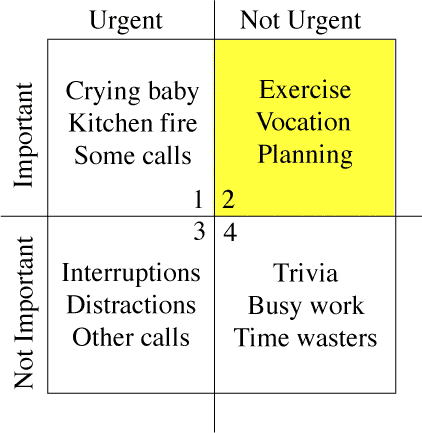
Eisenhower Method
Dwight D. Eisenhower · 1954
Eisenhower quoted a college president: 'The urgent are not important, and the important are never urgent.' Stephen Covey made it a four-box grid of urgent and important: do it now, schedule it, delegate it, or delete it. The box everyone skips, important but not urgent, is the one that builds a life.

1-2-3 Method
Cap the day at three tasks, chosen before it starts: usually one large and two small. The cap does the work. A ten-item list lets you clear the easy things while the hard one survives; three slots force the trade-off into the open.

Ivy Lee Method
Ivy Lee · 1918
Charles Schwab of Bethlehem Steel asked Ivy Lee to make his managers more productive, and to name his fee later. The rule: each evening write tomorrow's six most important tasks in order, and do not touch number two until number one is done. Schwab reportedly paid $25,000.
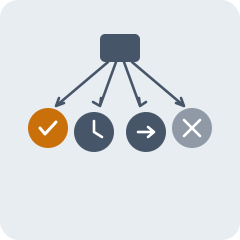
4-D Method
Four verbs for every task the moment it arrives. Do it if it takes under two minutes. Defer it to a set time, not 'later'. Delegate it. Or Delete it. The fourth is the one nobody performs, so most lists fill with tasks nobody will do and nobody will kill.
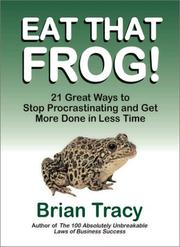
Eat That Frog ✨ NEW
Brian Tracy · 2001
From a line credited to Mark Twain, though nobody has found him writing it: eat a live frog first thing, and nothing worse can happen all day. Brian Tracy's method: do the ugliest task first, before email and easy wins, while attention is fresh.

Must-Do
The minimal list. Name only what is genuinely non-negotiable today, usually one to three items, and make the rest optional. The day becomes pass or fail: you did the must-dos or you didn't, and everything else is a bonus, not a debt.

Bullet Journal
Ryder Carroll
A paper notebook system built by Ryder Carroll to cope with his own attention problems. Rapid logging uses symbols: a dot for a task, a circle for an event, a dash for a note. The real mechanism is migration: each month you re-copy unfinished tasks by hand, and anything not worth rewriting drops away.
From God to Drew Carey ✨ NEW
Roy Baumeister and John Tierney · 2011
A chapter of Willpower tracing the to-do list from Genesis, a world made in a six-step plan, through Benjamin Franklin's virtues, to a comedian chasing productivity. A list can bring our highest happiness or our dreariest dissatisfaction, depending on how it is built.

Franklin's Clashing Virtues ✨ NEW
Benjamin Franklin
Benjamin Franklin listed virtues with a goal for each, like Order: 'let each part of your business have its time.' The goals fought. His schedule broke when a client came, because Industry said to meet them, and Frugality ate Industry's hours. Clashing goals bring unhappiness, not action.
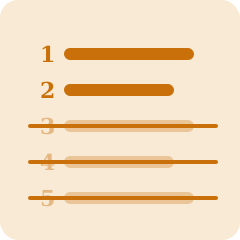
Cross Out Everything from Three Down ✨ NEW
A general at the Pentagon
At the Pentagon, generals were asked for their strategy in 25 words. Only one answered: the one woman in the room. 'First I make a list of priorities: one, two, three. Then I cross out everything from three down.' Blunt, but it reconciles the long term with the short.

Drew Carey's Next Steps ✨ NEW
David Allen
The comedian Drew Carey gave his to-do list to David Allen, author of Getting Things Done. Allen taught him to write specific next steps, not big goals. 'Sort out my career' cannot be done today, so it nags like a mother until one small, doable step is taken.
How it reads together
- 01 Every method here is subtraction, not storage: Eisenhower deletes a whole quadrant, Ivy Lee stops at six, Must-Do names three, the Bullet Journal makes each survivor earn a re-write. The purest version comes from a general at a Pentagon workshop, asked to sum up her strategy in 25 words: 'First I make a list of priorities: one, two, three, and so on. Then I cross out everything from three down.'
Across subjects
Aviation flipped the tool. After a Boeing bomber crashed in 1935, too complex to fly from memory, pilots invented the checklist — short, fixed, mandatory — and surgeons later copied it. A to-do list is made to be argued with; a checklist is made so nobody decides what to skip.
Theme angle
Crossing off the last item just means the list was too short. Which format is best? One side says hunting for the perfect system is procrastination — the best list is the one you'll keep. The other says the format shapes what you notice: Eisenhower weighs importance, the Bullet Journal makes each task earn its place.